

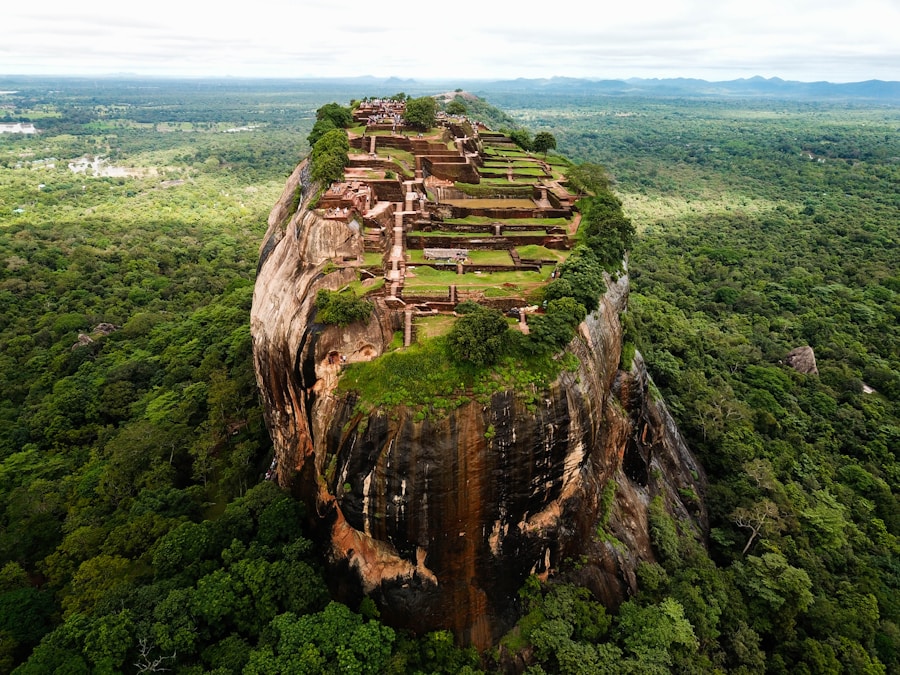
Climbing Sigiriya: The Complete Guide to Sri Lanka's Lion Rock
Everything you need to know before you climb — what to expect, when to go, what to see, and how to make the most of one of Asia's greatest ancient wonders.
Sigiriya is unlike any other ancient site on earth. Rising 200 metres from the flat plains of Sri Lanka's Cultural Triangle, the sheer granite rock once supported a complete royal palace on its summit — gardens, pools, audience halls, and all — built by King Kashyapa in the 5th century AD. The fact that it exists at all is extraordinary. That it survives in the condition it does, 1,500 years later, is miraculous.
What to Expect on the Climb
The ascent takes between 1 and 1.5 hours depending on your pace and how long you spend at each stop. It's not technically difficult — there are steps and handrails throughout — but it does require a reasonable level of fitness. The final section along the spiral staircase clinging to the rock face is exposed and involves some vertigo-inducing moments, but it is entirely manageable.
The Frescoes
About halfway up, a sheltered cavity in the rock face contains the famous Sigiriya frescoes — paintings of celestial maidens (apsaras) in natural pigments that have survived remarkably well for 1,500 years. Only 21 of the original figures remain, but the artistry and colour are astonishing.
The Mirror Wall
Just above the fresco cave, the ancient Mirror Wall stretches along the rock face — once so highly polished that King Kashyapa could see his reflection in it. For centuries, visitors inscribed poetry and observations on the wall. The earliest inscriptions date to the 6th century AD.
When to Go
Go early — gates open at 7am. By 9am the rock is significantly hotter and busier. Midday in the dry season (January–March) can be brutal. A sunrise climb in the early morning mist is the definitive Sigiriya experience.